Showing posts with label Herbal Therapy. Show all posts

Saturday, 8 September 2018

In the Greenhouse: Part 1

I love my whole farm but the one place that I spend a lot of time at is in my greenhouse.  My
greenhouse is designed to serve as my seeding area, fertiliser production mix area, my lab to test out elements in growing plants such as water, pest control and fertilisers, an area to plant the plants that require substantial TLC, a place to propagate plants as well as acclimatisation of plants before being planted outdoors or indoors.
The roof is almost totally plastic roofing sheets (similar to the zinc roofing sheets) to allow sunlight in  but keep the rain out hence it is where I can work rain or shine.  The walls are half brick and specially-crafted lattice wood with netting to reduce the amount of pests that can enter the greenhouse.  It is impossible to keep everything out as some are so tiny - almost like a speck of dirt size such as the whiteflies.  It is half bricks because on some area along the sides, I have built a cement rack that serves as seed germination and seedling area as well as newly propagated plants area.  Over the years, it has evolved from the simple design of 30 feet by 20 feet size to 60 feet by 20 feet and current setup.  By starting from a simple design, it allowed me time to test and figure out how I wanted my greenhouse to be to suit with the activities as well as my style of working.  It is a personal design space that I also enjoy relaxing in and getting oxygen therapy.

  As all the plants at the farm either are edible or therapeutic or both, the same types are planted in the greenhouse.  Working with my hands sometimes causes me to get cuts and nicks so I have my first aid plants in the greenhouse too.  The Indian Borage, Variegated Borage and Aloe Vera are my basics.  The borage with its antiseptic properties are great for cuts.  I just wash the affected area and mash the leaves and apply to the cut.  In a few minutes, it is taken care of and I can resume what I was doing.  If I get an inflammation on my skin, I just get the above vera leaf and get the gel and apply.  I also use the borage leaves to create an instant pest repellant by crushing the leaves in water and using the resulting liquid to spray on the plants.  It also has anti-viral and anti-fungus properties to care for the health of my plants.  Being non-toxic, I don't have to worry about using protective gear.  As I am creating the liquid, at the same time, I am also cleansing my hands from unwanted bacteria.  
Both plants are easy to propagate.  For the borage, I propagate from stem cuttings.  The aloe vera produces its own platelets which I will transplant to a separate container.  As I use them regularly, I propagate them often.

One of my favourite vegetable fruit is tomatoes.  They require a lot of care both from a pest control, fertilisation and water when grown organically and free from hormones as well.  It requires routine pest control activity as many pest love it like the whiteflies, aphids, black mold and ants to name a few.  The pests encourage each other.  With whiteflies, comes the aphids.  Then come the black mold and the ants.  Hence, it is imperative to control it from the beginning of the whiteflies.  I mix my own fertiliser from base ingredients like chicken manure, goat manure, compost, eco enzyme (a.k.a. garbage enzyme) and EM-1.  I tend to mix them depending on the growth and condition of the plant as having the fertiliser production mix are in the greenhouse, it makes it easier for me to get it done.  

Currently I have 3 varieties in various stages growing: Hybrid tomatoes, Cherry tomatoes and Heirloom tomatoes.  Although I have grown the hybrid and cherry tomatoes side by side, I planted the heirloom tomatoes separately in their own bed, separated by another planting bed as well as walkway.  I intend to save the seeds from the heirloom tomatoes in my seed bank.  These plants need to have their soil topped-up to cover their roots every so often so having my planting soil mixture area in the greenhouse also makes it convenient.  I will not plant them outside as then they will be exposed to many more pests including birds and my free-range chickens.  I have tried planting them outdoors but have always lost to the birds, chickens and other pests.

I also do companion planting in the greenhouse hence I also have various types of chilli plants in the greenhouse.  Although I do not eat much chillies, there are many around me who do.  I have a few varieties planted including habaneros, thai chilli and cili api.  I have the habaneros in a row but have the others planted in polybags in different sections of the greenhouse.  These plants also are a favourite of the whiteflies so whenever I do my pest control spray, I spray them at the same time too.  They also need to be fertilised rather frequently - once a week - so having them in the greenhouse also reduces time for fertilisation as I also custom fertilise them depending on the stage and any problems that I see with them.

I tend to spend hours at a time in the greenhouse so I also plant some ulam for me to munch on as
snacks.  One of my favourite plants - not only for taste but also because I think it is beautiful - is the Sambung Nyawa Batik.  I plant them in containers in a few locations.  Whenever I feel like munching on something, I just get a few leaves, rinse them and munch.  They are easy to propagate and with proper care, are vigorous growers.

The story of the plants in the greenhouse continues in Part 2.

Sunday, 10 December 2017

Go Local >> Part 1: Cancer Commonality Factor - Constipation

A few weeks I listened to Dr. Lou Coutinho speak on treating cancer patients and the research that they have done with these patients in finding the commonality factors.  They found 4 factors and I find them interesting as as he puts it, you do not need to spend a lot of money to prevent cancer but make changes in your daily diet and lifestyle.  This I truly belief.  As he puts it, there are all types of cancer patients irrespective of ethnic backgrounds, body size, occupation or financial status and they collected data on patients from many different countries.
One of the factors is constipation.  This makes sense to me as with constipation, your body retains the wastes and toxins longer in your body as well as prevents regular disposal of your body wastes as well as toxins.

If you are constipated regularly, heading for the medicine cabinet is not the answer as it addresses a symptom but does not solve the underlying issue.  It is crucial that the body can get rid of the wastes and toxins efficiently and that it does nor cause issues with your gastro-intestinal system or lead to the toxins and wastes re-entering the blood system as it would mean that these toxins and wastes would then cause problems to other organs of your body.  This would create a conducive environment for the cancer cells in your body to mutate and become active.

Thus caring for the gastrointestinal (GI) system is of the upmost importance and this includes the stomach, pancreas, intestines and colon.  Water is one of the essential elements in maintaining a healthy GI system.  Hence be sure to drink sufficient clean water daily and the amount varies depending on the activity from at least 1 liter.  Coffee, tea, carbonated drinks are not considered to fall into the water category.

Our GI system contains friendly-bacteria that helps in the process of digestion.  Certain things that we do can cause these friendly bacteria to die or reduce in quantity.  Amongst the most often cause is prescribed antibiotics.  Many take costly probiotics and probiotics but there are so many kinds and each person varies in the type and quantity of bacteria present.  After all, each person has a different kind of diet, etc. After thinking about it, I decided to write this article on what we have locally that is low in cost and effective.

We are blessed because we have natural herbals locally grown which contribute towards a healthy GI system.  The top on my list is turmeric and ginger.  They are easily available and easy to grow in our gardens, whether in pots or in the ground.  As long as they get sunshine, water and some fertiliser, they will grow just fine.  As many already know, black pepper is essential in increasing the bioavailability of curcumin (the main phytonutrient we want in turmeric) and we have these grown locally.  I favour Sarawak black pepper or any organically grown black pepper.  We can easily incorporate this into our daily diet.

Many of our normal daily dishes can easily have these ingredients added to it.  When we make soups, just add some turmeric, black pepper and ginger.  When we do stir-fry dishes, again these three


ingredients can be added.  Most of us have rice as the main staple and we can elevate this staple by adding these three ingredients.  We can also add these ingredients to our teas or milk drinks.  Be sure not to use refined sugar as this will help create an acidic environment favourable for cancer cells mutation and growth.

What else can we eat to further improve our GI system.  Try adding tapioca, another easily available, locally-frown ingredient,  to your diet as with its high fiber content, it will help the disposal of toxins in our GI system.  It also has a low glycemic index hence replacing your rice with this as the staple carbohydrate will further add benefits to your diet.  It also helps in the growth of the beneficial bacteria in our GI system.

It is hard to overdose on this when you eat it naturally and I haven't been able to find any adverse reactions or contraindications when taken as normal food.  Simple changes that can make a difference.

Monday, 9 October 2017

Busybody about my body: Dealing with Flu Naturally

I do not know of anyone who has never gotten a flu and it is a common disease that I think people look at it less seriously.  However, not taken care of, it can lead to other complications such as pneumonia, sepsis, inflammation of the heart (myocarditis) as well as aggravating some other conditions like asthma.  So whilst it is common, I do not take it lightly.  The symptoms include :

  1. sore throat
  2. runny or stuffed nose
  3. fever
  4. muscle aches and pains
  5. headache
  6. fatigue.
It is cause by a virus and nowadays there are so many variants.  Often, when you visit a doctor, you can expect to get three types of medication: one for fever, one for sore throat and congestion and of course antibiotics.  Most literature strenuously point out that it is important to complete the entire course of the antibiotics for it to be effective.

Last week I caught the flu.  I knew I was going to get it because my son came down with it in a bad way and there is no way I can avoid contact with him.  He was literally stuck to my side and with his high fever, I was monitoring him very closely.  Being only 4 years old, he has a higher risk of complications.  When his fever rose to close to 40 degrees Celsius, we headed to the hospital.  I wasn't taking any risks.  We managed to bring his fever down about 2 hours later but he was still feverish.  As for me, the minute I saw he caught the flu, I began my regime of 1 tablespoon of EVCO every 4 hours and 1 tablespoon of honey twice a day.  At the same time, I also gave my son EVCO every 2 hours along with his fever medication every 4 hours until his fever was all gone, which was a day later.  He also was on antibiotics for 3 days which caused diarrhoea so now he is also taking probiotics daily to re-balance his digestive system.  My son is still on daily 1 teaspoon of EVCO and 1 teaspoon honey, twice a day until he fully recovers.  He is not taking any other medication.  Then it was my turn.

I was flat on the bed for about 16 hours and during this period, I continued with hourly tablespoon of EVCO and every fours 1 tablespoon of honey. Then it was the morning on the next day and my fever was gone but I felt the muscle aches.  It was time to start taking my Bentong ginger and turmeric concentrate - 2 tablespoon diluted with warm water with 1 teaspoon of honey every 4 hours.  By evening, I was left with a slight cough and slight congestion.  So, I continue with my three times a day of 1 tablespoon of EVCO and 1 teaspoon of honey.  I have also added drinking Roselle juice twice a day to boost my immune system and to prevent any more fever.

There is pharmacological and studies backing the treatment that I chose for myself.

  1. Flu is cause by virus (and there are many strains) and can be complicated with bacteria.  To address this, the EVCO has strong anti-viral and anti-bacteria properties.  Honey too has strong anti-bacteria and anti-viral properties.  This composition gives me a wider range of defence.  It also helps in strengthening my immune system.  This also became a source of food for me.
  2. Muscle aches and pains makes movement painful so the Bentong ginger and turmeric helps to ease these aches and pains as well as reduce any internal inflammations.  It has strong anti-inflammatory properties as well as digestive system protection properties.  At the same time, since my appetite was non-existent, I barely ate so this combination help reduce any stomach problems.
  3. Roselle has good immune boosting capabilities so is a good option to take during the recovery period.
I prefer going the natural route as I do not like drugs and antibiotics because of all the side effects including destroying the good bacteria necessary for a healthy digestive system (one of the reasons why people also tend to get diarrhoea when they get flu).  With no appetite, I didn't have to try and stuff something in me before I took the EVCO, honey, Benton ginger & turmeric or Roselle as they are all food.  They were also my food.  It is also hard to overdose on these because as we age, all types of body parts need maintenance and repair as well as some rebuild.  Throughout this whole flu experience, my brain remain active, alert and lucid even when I had my eyes closed.  Being down for only a day was good as the next day, my son was ready to play.

As always, we have choices.  What is important is that we are aware of what we are doing, monitor our condition and be sure that what we are taking is pure, natural items which are organic and processed in a way to ensure maximum properties and nutrients are preserved.  Be knowledgeable in taking care of your health.

Saturday, 2 September 2017

Natural Preventive and curative: My Basics

The main purpose of the farm is to produce chemical-free and hormone-free edibles and through the years, I have selected some staples for a reason.  I still continue to plant and nurture many different plants as I am ever the optimist in believing that I will have time to study them further for their benefits so until them, I will care for them.  The staples that I have narrowed down to is based on what I feel is the basics for my health from a preventive and curative view.  So what are my basics: ginger, turmeric, coconut, and roselle.  Why you may ask?  Simple, I need to keep my immune system and my central nervous system (including the brain) healthy.   I am not a doctor so I do not do diagnosis or pharmacological advise.   I practice natural food therapy in my daily life so I share what I experience and know.

The largest organ in my body for the immune system is the gut which includes the stomach, intestine and bowel.   It performs the key function of removing toxins and wastes from our body as well as allowing absortion of nutrients by our body.  If our gut cannot function properly, the food is not digested properly, our body doesn't get the proper nutrients, and our body doesn't eliminate the toxins and wastes properly.  If the gut is not healthy, it can also cause toxins and harmful bacteria to enter our blood system which can result in other organs being damaged and allergies.  For me, the easiest way to care for them is to incorporate ginger, turmeric, tapioca and roselle into my normal food intake, either as solids or liquids.


To care for my central nervous system, especially my brain, I look to coconuts which I either consume as a drink or using extra virgin coconut oil (EVCO).  Studies have proven that the ketones in coconut oil can help rebuild or repair our brain cells.  An illness that many of us are aware of that affects the brain is Alzheimer's.  It has been shown that consumption of EVCO can improve and even cure this condition and best of all, no negative side effects - this is something that almost all the drugs cannot claim.  I choose EVCO because it is the purest form of coconut oil and when produced from organic coconuts does not contain contaminants.  It is produced using cold-pressed method from fresh coconuts.  It doesn't undergo any chemical process or drying that can contaminate the coconut.

Of course, ginger, turmeric, coconut, tapioca and roselle also have other benefits so by incorporating them in my diet, I get to enjoy them too.  These 5 provides antibacterial, antiviral, improve the immune system, helps to lower cholesterol, improves blood circulation, helps to improve high blood pressure condition, improve digestion, anti-inflammatory, anti-cancer - to name a few.  One of my key focus is to share what can be planted by everyone or if not, what can be obtained locally with the cost also being a factor.  Ginger, turmeric and roselle can be planted in containers for those who do not have much planting space.  If you have a small space, you can plant tapioca and dwarf coconuts but if you can't, they are easily purchased.  None of these need to be imported as they can be obtained locally so this can make it affordable to many.  Try incorporating them into your normal daily diet and I hope you can reap the benefits of a better health.

Thursday, 17 August 2017

Eat for Life: Naturally maintaining my gut

We often are more reactive than proactive and we tend to want miracle cures.  I decided to change my diet from being reactive to proactive and one of the major changes is the diligent inclusion of turmeric and ginger, roselle probiotics and virgin coconut oil in my diet.  This combination provides a wealth of health benefits but in a proactive measure, one of the main ones that I want is the care and maintenance for my gut.  I have done a lot of research on this and will continue to follow developments from both the medical world as well as the alternative holistic therapies.
Our gut is the biggest immune organ in our body with the main function of processing our food and removing toxins.  It is basically our digestive tract.  Over the last few years, more and more information has been disseminated regarding a condition called leaky gut.  A leaky gut causes allergens and toxins as well as bacteria and viruses to enter out bloodstream leading to many illnesses including infections to other organs like the brain, heart, kidney and others, allergies and autoimmune.  The symptoms are many and is often misdiagnosed resulting in our medical treatment addressing the symptoms but not the condition.   Some of the symptoms are:

  1.  allergies
  2. infections to various organs and within the body
  3. body aches and pains
  4. bloating
  5. cramps

The symptoms and manifestation of the problem is common enough that the treatment is often for the symptom and not addressing the underlying issue.

Some of the causes are:

  1. age
  2. gluten
  3. antibiotics
  4. food additives
  5. carcinogens


How to avoid a leaky gut?  Easy but can be difficult to do for some: take care of your gut and prevent the lining from breaking down or having holes.  Basically, one needs to take care of what one consumes.  A healthy gut has good digestive tract walls and good bacteria.  As we age, our body will breakdown and need repairing so similar to having a car, one needs to do maintenance.  Some repairs here and there, replacing what is worn down, etc.

In my proactive mode, I have added 3 items which not only is good for my gut health but also contains other health benefits:

  1. Bentong ginger and turmeric with black pepper
  2. Roselle probiotics
  3. Extra virgin coconut oil


These 3 items promotes the repair work, addressing the symptoms with its anti-bacterial, anti-viral and anti inflammation properties and then continues to promote the health of my gut with the probiotics and "cleaning" activities.  They are simple to add to my daily diet and doesn't require major changes to my routine and readily available.  I am a firm believer that if we cannot make something a normal thing to do, it will be hard to remain diligent and sustain it as a normal course in our life.  Whilst some of this are available in pill forms, a few factors make it less desirable:

  • I do not know what is added during the process to convert it from natural state to pill or capsule
  • The cost is higher than the natural state
  • While it may be convenient, over a period of time, I will become bored and lazy to pop the pills and ultimately, just stop doing it
  • There is no fun in pill popping - there is no enjoyment in consuming it and it becomes a to-do task as opposed to something I do normally


My focus has always been on organic and local so that it is easily available and affordable.  After all, if it is expensive that it is out of reach to the masses.  As with everything you consume, do find out about the source of what you consume and that it is natural, organically grown without hormones as well as additives-free and this includes preservatives, sugar, colouring.

Saturday, 5 August 2017

The bountiful God's Crown (Mahkota Dewa) Fruit

With such a grand name, Mahkota Dewa (God's Crown) is traditionally used in many ways.  It's botanical name is Phaleria Macrocarpa.  At the farm, our 4 years old tree stands about 2 meters.  I haven't trimmed it since I propagated it from
seed and it is now fruiting in abundance so I will wait a little while before I prune it a bit.  Watching its growth, I would say it is a slow grower in height but that doesn't mean the same for the fruiting.  It starts fruiting in about 1 year.  The fruit is a dark red color when it ripens and it is at this stage that I harvest.
The outer skin of the fruit is slightly waxy and the flesh is fibrous and white in color.  For the first 3 years, I only fertilised it about once every six months so there wasn't much fruits produced.  However in the last year, I fertilised it quarterly and I see a marked difference in the quantity of the fruit.  I use organic, farm-produced fertiliser since I wanted to ensure as best as I can that it is free from toxins and chemicals as ultimately, I plan to use it as a health "supplement".
I use the fruit to produce my tea.  It contains alkaloid, flavonoid, polyphenol and antioxidants making it rich in benefits in traditional preventive and curative therapy.  I drink the tea at least once a week as part of my detoxification regime with its alkaloid content.  It helps to cleanse the liver, kidneys and digestive system.  It is also antiviral and antibacterial which helps strengthen my immune system.  Sometime I drink more times depending on how I feel.
Amongst its other uses in traditional therapy are:

  1. To help lower the blood sugar for diabetics due to its saponin content
  2. To cleanse the blood due to its flavonoid content
  3. To improve the body's metabolism due to its flavonoid content
  4. To reduce cholesterol due to its flavonoid content
  5. As an alternative tutor and cancer therapy from its antioxidants and alkaloids
  6. To reduce the fats in the blood due to its flavonoid content
A noted point is pregnant women and post-natal women shouldn't consume this.

I checked around for dried Mahkota Dewa fruit and the price ranges from RM 50-60 per 100 gm.  As I cannot verify that it is organically produced nor using the method that least introduces contaminants, I decided to make my own.  I produce the tea by first harvesting mature fruits, slicing and dehydrating them.  Traditionally, it is sun-dried but I prefer to dehydrate so as not to introduce contaminants.  Once dried, it can be stored
for many months - at least 3 months - though I tend to prepare mine at regular intervals.
I use a claypot to are my tea, about 10gm per litre of water.  I bring it to a boil and allow it to cool in the claypot before drinking it.  It looks like regular tea and the taste is slightly bitter (like when you are too strong tea) with fruity undertones.  To make it more bland, you can always add more water to dilute it but I find that it is not necessary.
With all the benefits and the taste, I find it easy to add it to my regular drinks list.  In case you wonder what is on my regular drinks list, they are misai  kucing tea, soursop leaves tea, Bentong ginger and turmeric drink, Roselle (tea and drink) as well as variations of calamansi drinks (with lemongrass or bunga telling).  With this variety, I am never bored but I feel that it makes going organic and natural brings lots of benefits to my health maintenance.

Friday, 10 March 2017

My plant choices - herb staples

Although I have quite a big space to plant at the farm, it seems like the space gets eaten up so fast so I do have to be selective in order to produce sustainable quantities for my purposes.  I select them based on the following:

  1. High value multi-purpose which translates to they can be used for various reasons and have therapeutic benefits
  2. Suitability to the land as depending on the plant, the soil has to be suitable
  3. Ease of propagating so that I can continue to have new seedlings
  4. Ease of maintenance and care as with many plants and my hectic schedule, I need to ensure that I can care for them properly.
It is hard to narrow down choices as they are all fantastic plants but I have managed to narrow them down and grouped them into what I grow a lot of and what falls in my herbal collection.  I enjoy being able to harvest them for my use and know that it is clean - free from chemical pesticides and herbicides - and that it is available when I want them.

The staples that I consider every garden should have is and is my 5 basics :
Lemongrass
It has a high value due to their therapeutic values as well as can be used is in many ways.  It can be used in making drinks as well as in cooking.  They are easy to care although they are "voracious eaters" so ensuing plantings will have to be moved to a different area.  They can be planted in almost any soil type except for heavy clay.  Propagating them is by using the whole stalk.  They can be planted in pots or in the ground so if you have a small space, just plant them in pots. and requires minimal fertilisation.  Although you can harvest them on as needed basis, it is best to replant them every 6 months to maintain the quality in either a different soil or area.

Turmeric
The benefits of turmeric are well known and is also one of the condiments often used in cooking.
The whole plant has uses, from the leaves to the rhizome and the flower.  They require minimal care and if planted in good soil, doesn't need fertilisation or minimal fertilisation.  It can be planted in pots or in the ground.  Propagation is via the rhizome.   It can be harvested on an as-needed-basis so it works well in creating a long-term edible garden.

Sand ginger (Cekur or Kencur)
Similar to turmeric, the whole plant can be used.  The leaves and rhizomes have therapeutic values and used as condiments in cooking.  They can be planted in containers or in the ground and does best in rich, organic soil with some sand content.  Propagation is via the rhizome.  You can harvest the leaves on as-needed-basis but to harvest the rhizome, it is best to harvest the whole plant.

Ginger - Bentong (Halia Bentong)
This is one of my favourites with its therapeutic values and multi-uses.  It can be turned into a drink, used as a condiment, made into a pickle and used in combination with other herbs to create an organic pest control.  It also produces a flower, similar in shape to the turmeric, but in red color.  It does best in soil with a good content of sand and doesn't tolerate water-logged soil.  Propagation is via its rhizome.  I choose this over the regular ginger due to its therapeutic values and beautiful flower.  You can harvest them on a as-needed-basis but it is best to replant after 1 year to continue to have quality ginger.

Small Galangal (Lengkuas kecil)
Amongst the various herbs, I consider this plant to produce the prettiest flower.  It has therapeutic values which makes it a plus when used in cooking.  It does best planted in the ground although it can also be planted in pots. It loves a rich, organic soil.  Propagation is via its rhizome.  I choose this over the regular galangal due to its more "potent" flavour and beautiful flower.  I tend to replant these every 2 years to maintain continuity and quality.

These basic 5 can add beauty to your garden and you can arrange them in such a way that it becomes a floral arrangement in your landscape.  If you have limited space, all you need is five pots and a few more pots a few months later for continuity of supply. :)


Saturday, 21 January 2017

Possibilities in dehydrating Part 1

This is part 1 of my new series on dehydrated foods.  All the produce that we dehydrate are produced at the farm hence it is natural and grown in an organic manner.  I remember growing up, my grandmother, grand-aunts and aunts often things were dried to preserve them especially in the villages where there was no electricity supply which means no refrigerators, chillers or freezers.  They did it to various fruits and also fish.  They didn't use low quality items but fresh, good quality items to create these foods that can be preserved for later consumption.  With our weather and tropical fruits, once ripe they do not store for long periods well so dehydrating them is a good option.

We only do market once a week and the fruits ripen when they "feel" like it.  To me, they will not be in its prime for market so I had to come up with a way to not waste them.  I also had to come up with an alternative on the occasion that we are left with some produce after market.  After all the hard work in growing and caring for them, it would be a shame to just have it rot away although at the farm, it becomes food for the animals.  After evaluating various options, I decided to invest in a dehydrator as to me, the fresh produce can then be dried in a clean manner free from flies and the like, preserving as much as the nutrients and allowing for storage without the need for chillers or refrigerators.

Two of the fruits that we dehydrate and convert to an on-the-go snack which is healthy and tasty are papayas and bananas.  By dehydrating it, there is a minimal loss of the nutrients and the flavour is intensified.  It is packed in a suggested fruit serving size so it is easy to take it with you.  It can also serve as your breakfast fruit if you are on the run - you can munch it on your way to work.  The idea is to have your fruit servings easily accessible as a snack without any additives, sugar, colouring or preservatives.  Seasonally, we will also have dehydrated jackfruit.

One of the often used plant as a condiment that we dehydrate is lemongrass.  It comes in a crushed form and can be used in multiple ways.  By steeping in hot water, it can be turned into lemongrass tea.  This drink can be served either warm or cold, either sweetened or unsweetened or added to another drink as flavouring.  In the crushed form, it can also be used for cooking.  Being in a dehydrated form, it can be stored in your kitchen, ready for use whenever you want.    One stalk is approximately 1 teaspoon.  We do not add anything to our dehydrated lemongrass so it is pure lemongrass.  Lemongrass is an alternative therapy or home remedy used for various conditions such as to aid in digestion, improve skin condition, fighting cancer, controlling cholesterol levels, for cleansing and detoxifying - there are quite a few others.  Some of the properties of the lemongrass are analgesic, anti-inflammatory, antiseptic, anticancer, antibacterial and diuretic.  It is from these properties that it is used as alternative or complementary treatment.  I find the taste to be pleasing and add it to drinks and used it for cooking.  Although I prefer it fresh, for the times when I do not have any fresh lemongrass, this works just as well.

Ginger torch is also another commonly used herbal condiment in local cuisine.  By having the
dehydrated crushed ginger torch flower within easy access, you can use it as a seasoning that is sprinkled over the top of hot rice, giving a wonderful fragrance to plain white rice.  It can also be used to season various dishes. namely savoury dishes.  Each pack contains only ginger torch flowers without any preservatives,  The color of the crushed ginger torch is also all natural - the color of the flower.  With the dehydration process, it retains its aromatics and flavour.  There is no need to refrigerate it, just store it the same manner that you would store dried herbs - in a cool area.
In traditional or alternative therapy, it is used to reduce diabetes and hypertension and also to treat loss of appetite.  No wonder I like the plain rice better when I sprinkle some bunga kantan on it.  It is said to also have anti-inflammatory properties.

Blue sweet pea flower (bunga telang) is a bright, depp blue flower which is often used in Malay cooking especially for making nasi kerabu, colouring the rice a nice blue.  This flower is a natural food colouring and with its color also have antioxidant properties as well as other healing properties.  To make a food colouring, just pour hot water over a few friend flowers and allow it to steep until the liquid is cool.  This liquid can then be used as a food colouring for making cakes, agar-agar, etc.  Apart from using it as a food colouring to make both savoury and sweet dishes, it also makes a nice blue tea with a subtle floral flavour.  To make the tea, pour hot water over a few pieces of the dried flower and you will immediately see the water turning blue.  It can be served hot or cold, sweetened or unsweetened.  It can be combined with other ingredients to make a drink and I find it interesting that when calamansi (limau kasturi) juice is added to it, it turns into a royal purple color.  This would make an interesting and good tasting drink especially for children in providing them with a healthy alternative.  The flowers are picked at full bloom and dehydrated making it easy to store and have readily available.

I grow all kinds of plants that lends itself to being dehydrated and in part 2, I will describe the other dried products that we have :)


Monday, 12 September 2016

More than just a flower, Roselle


Living in Malaysia, it is easy to grow Roselle (scientific name: Hibiscus sabdariffa L., Malay name: Asam Belanda)  plants which are from the Hibiscus family.  Given the right care, it produces flowers lavishly.  The beautiful flowers have delicate petals of light pink incisor with a dark red centre.  As part of your flowering edible landscape, it is a great choice.  It can grow tall, reaching over 2m in height.  The growth can be controlled by regular pruning which not only shapes the plant but at the same time encourage new growth which leads to more flowers.

Roselle is interesting in that it is what I call a flower fruit or the correct term is calyx (plural form: calyces).  It is unique in shape and texture with a dark red color which turns almost black-red when dry.  However, when you turn it into a juice, it become a blood red color.  As part of a daily diet designed to promote good health, the juice is rich in vitamin C and other nutrients including anti-oxidants.  For me, it is the drink of choice as opposed to processed fruit juices that contains all kinds of additives and artificial colouring.

Based on a study by Purdue University, it is high in calcium, niacin, riboflavin, vitamin C and iron.  It is also caffeine-free hence it can be made as an after-dinner tea for those who cannot consume caffeine after late afternoon or they have a hard time sleeping.


It is easy to make the drink.  Just peel-off the petals from the seed pod, chop it into small pieces, place it in a claypot and bring it to boil.  A dark red liquid can be produced.  The resulting liquid is very sour.  Do not discard the chopped petals as it can be consumed either by adding it to the drink or turned into a jam.  When it is drank warm, it is often referred to as Roselle tea but when it is drank cold, it is referred to as Roselle juice.  The drink can be sweetened with honey, raw sugar or brown sugar.  I do not recommend white sugar as it adds unhealthy benefits to the drink.

You can also use it in your cooking to add the sour flavour as well as red color to your dish.

I am not a proponent of artificially and chemically produced supplements or supplements that undergo chemical process and later have all kinds of additives and preservatives hence the drink is one of my choice of drinks for vitamin C.

It also has anti-hypertensive properties and studies have been done and found that it produces a positive effect in lowering blood pressure - another plus for me as being from a family of history of high blood pressure, I see this drink as a preventive as well as a curative measure.  With our hot climate, it is a cooling drink to help quench thirst.

I am recovering from a cold so this is my daily drink now with its high natural ascorbic acid content (vitamin C) as well as the anti-bacterial and anti-inflammatory properties to aid in natural healing.

The Roselle can also be made into a probiotic drink by undergoing a fermentation process.  The benefit of doing this is apart from the probiotics, you can store the fermented concentrate for a long period without the need for refrigeration.

All in all, why I love it as a daily drink or regular drink : I get my vitamins and minerals which help me boost my immune system, reduces hypertension (my blood pressure will rise after a hot day working outdoors), quench my thirst, increase my metabolism and reduce the hydrolysation of starch to sugar), cancer prevention, decreases bronchoconstriction so I can breathe better and helps keep my bones and teeth healthy.  What more can I ask from a drink?  All these goodness also makes it the juice I choose for my 3 year-old - to me it is much better than a lot of the processed fruit juices out there - and he loves it.

As with many natural ways, it takes regular consumption to get the best benefits - it is not a miracle cure nor does it give immediate effects like pharmaceutical drugs.  However, it is a way of enjoying healthy food for long term benefits without the many negative side effects. So, let us maximise one of nature's bounty.

Sunday, 10 July 2016

The beauty of temulawak

 I got so many queries on this plant after I posted the picture of its beautiful flower so I hope this short article may help answer most of the questions.

The temulawak (curcuma zanthorrhiza) or known as Javanese ginger is a "cousin" of the turmeric (curcuma long) hence the similar shaped flowers.  Whilst the turmeric flower is of the same shape and is light green in color with yellow inner "buds", the temulawak has a striking purple/pink flower with yellow inner buds.   The flower is long lasting, from the initial flower to final bloom taking lasting over 1 month.  The initial flower is pink with purple tips which turns into a lighter pink as it progresses through the blooming stage.

Being similar to turmeric, it has rhizomes from which it can be propagated.  Although it is in the ginger family, the rhizomes are closer in appearance to the turmeric than ginger.

As with many rhizome-based plants, soil drainage is important to prevent the rhizomes from rotting due to water-logged soil.  The soil composition should contain some sand as well as lots of organic matter.  It doesn't do well in heavy clay soil.

To differentiate the rhizomes from others of the same family, the inner rhizome is off-white in color and has a texture similar to the ginger but less fibrous.  IT has a brown rim around the edges.  The rhizomes form a similar cluster to the turmeric rhizomes.

The rhizomes is used mainly in traditional therapy for treatment of certain illness as well as in skin care.  It can also be used as a spice.  It has a smell that is like a cross between ginger and turmeric.  In traditional therapy, it has been used for overcoming kidney diseases, heartburn, lowering cholesterol and other types of illness.  Being of the curcuma family, it has the similar benefits as turmeric.

This plant is easy to care for and can be grown either in a polybag or container, or in the ground.  If it is grown in a polybag, water when the soil has dried.  It doesn't need much fertiliser but a soil with phosphorous and calcium will encourage it to flower.  It grows in full sun or semi-shade.

The leaves are more similar to turmeric with a single leave per stalk from the main "stem" with the difference being a reddish-brown strip in the middle.  It can grown to about 1m tall.  As the plant grows, the rhizomes will multiply creating a cluster.  The rhizome can be harvested when needed without affecting the overall health of the plant.  You do not need to pull out the whole plant for harvesting.

This plant makes a lovely addition to your home garden providing beauty and benefits.  Since it is easy to grow and maintain, you might want to consider planting this even if you are a beginner gardener.  Happy planting.

Wednesday, 25 May 2016

Bunga Tasbih - striking flower with benefits

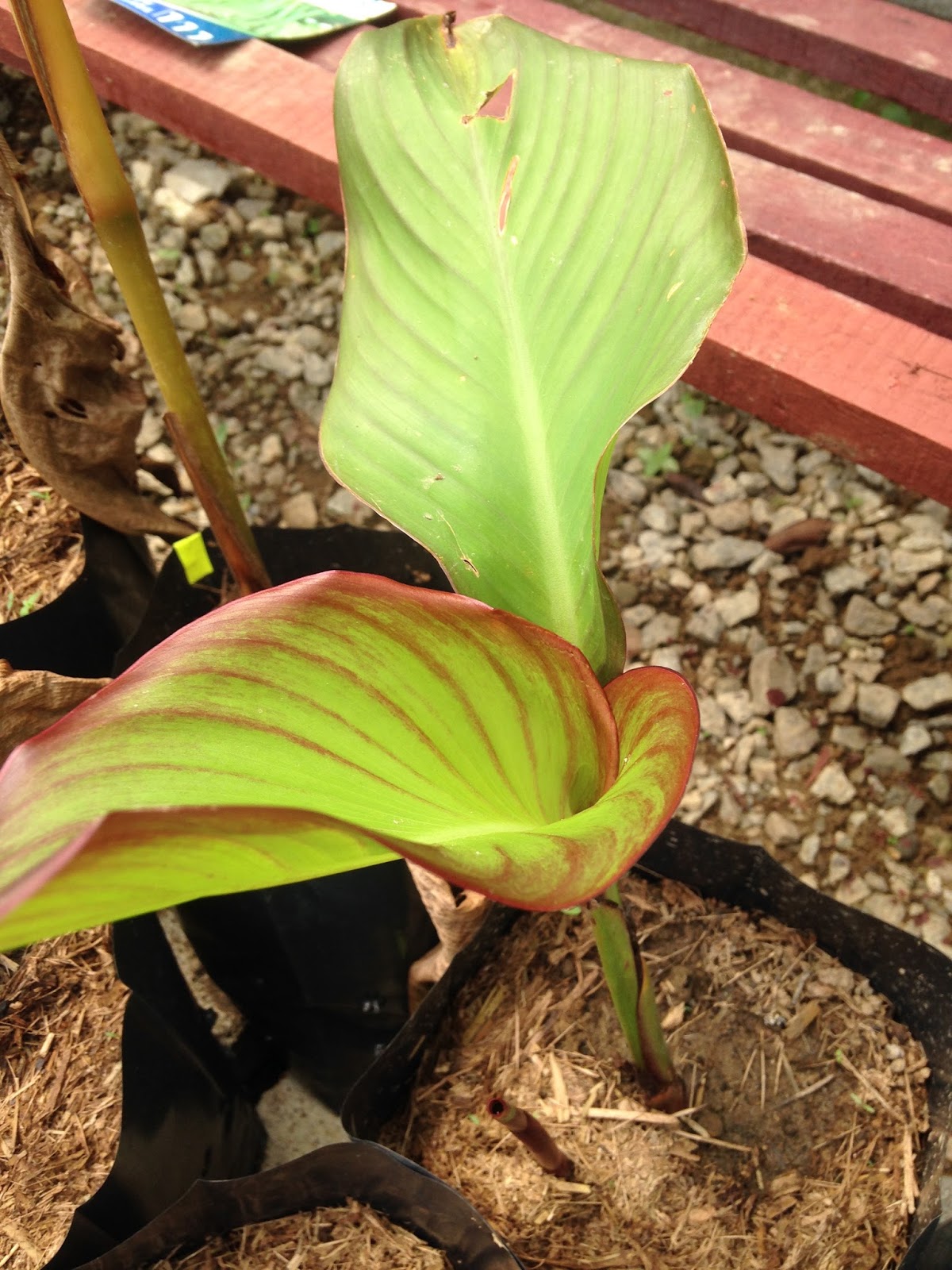
Bunga Tasbih (scientific name: canna indica linn) grows easily in our tropical climate and has a low maintenance.  It can be planted either in containers or in the ground and will flower in either method. However, when planting in a container, it needs to be planted in a big container of at least 30cm in diameter to ensure good growth.  There are many varieties of this plant and the one that we have at the farm has red flowers.  The leaves have a red rim along the outer edges.

This plant is a perennial and a healthy plant will flourish and produce baby plants.  These plants can be separated and re-planted.  You can also propagate them from the tuber.  It is a hardy plant that loves lover but soil with good drainage.  It can grow to about 2m tall and a healthy plant will produce big leaves.  It can be grown in full sun or semi-shade.  It requires little fertilisation.  On plants that I grow in the ground, my chickens provide the fertiliser.  On plants that I grown in containers, I start with a rich organic soil and top wth a mixture of mulch and chicken manure once every3-4 months.

For home landscape, I suggest that it is planted in containers or in a bordered planting bed to control the spread of growth.

In traditional medicine, the tuber is used for treatment of hypertension, high blood pressure, haemorrhoid,  inflamed liver as well as for high fever.  The root tuber is sliced and boiled and consumed as a drink.  The tuber is also turned into a paste and used in skin care for reducing or treating acne and general skin care.

As the flower matures and die off, it produces seeds which when fully matured, can be dried out and used to create a rosary or tasbih, a reflection of the Malay name: Bunga Tasbih which translated to English is Rosary Flower.

Sunday, 27 March 2016

Nature's health treasure trove - Ketumpang Air

The Ketumpang Air or Sireh Cina (Botanical Name : Peperomia pellucida)  is easy to find as well as
easy to grow especially in damp and shady areas.  They only need a bit of sunlight (after all they need to manufacture their food through photosynthesis).  As such, it is quite often found by the roadsides, along drains and streets as well as in shady corners of a garden.  It can be planted in a container or in the ground - whatever the manner, it is good to ensure that the soil is able to retain moisture and is moist and not water-clogged.

At a glance, they look like miniature betel (sireh) leaves, heart-shaped leaves which are light green when young and turn to darker green.  The stems which are easy to break are succulent-like and light green in color.  The plants require a moist soil to flourish as being almost succulent in nature, the plant itself contains a lot of water, within the stem as well as the leaves.  The stem and leaves are crunchy due to this.  On the other hand, due to the amount of water it retains, it is important to ensure that the plants are grown in good soil, free of contaminants and it is watered with clean water.  Otherwise you will end up with all the contaminants being part of the plant and affecting the taste of the leaves and stems - the parts that you consume.

The leaves and stems have many therapeutic benefits as documented in the herbal world.  It is alkaloid in nature.  Amongst its therapeutic benefits are as :

  • Analgesic
  • Antiinflammatory
  • Anticancer
  • Antiarthritic
  • Antidiarrheal
  • Antioxidant
  • Antirheumatic
  • Antifungal
  • Antibacterial
With all these therapeutic benefits, it is popular with herbalists in various types of therapy.    Amongst the therapy it is used in is for gout, high blood pressure, sore throat and cough, and a whole list of other health issues.

It is because of all these benefits, that I consume this although as with any herbs, one should not consume it excessively.  I consume it raw as I want to get maximum benefits.  Due to its high water content, it is also often juiced.  It can also be cooked as a "soupy" vegetable dish or boiled and drank as a tea.  It has a subtle peppery taste and absorbs other flavours.  A note to remember, if the plant is planted in contaminated soil or in mouldy areas, the taste will be affected and no amount of washing or rinsing will remove it as it will be present at the "cellular" level.

With its fresh, subtle peppery taste and crunchiness, this is nature's pharmacy at its best :)

Thursday, 20 August 2015

How the Super 5 salad came about

Over the years, I have continued my research on the various herbs and plants that I have planted at the farm.  I read up research articles, talked to alternative medicine practitioners as well as tried them out myself.  It is born out of my love for healing, gardening and keeping our tradition alive.  So this article is based on what I have learnt and experienced.  

We live in a country rich in natural resources that we have only just begun to document with many of the information passed over the generations by word of mouth.  Whilst pharmaceuticals tend to address corrective measures, our ancestors had a diet full of preventive measures and my aim is to focus more on preventive measures but at the same time look for curative measures.  

In our fast-paced life, I find that salads are one of the best mechanisms for eating food that is nutritious and full of preventive measures - all of it being organic since introducing chemical pesticides and herbicides only adds toxins and cancer-causing elements to out diet.  In selecting the Super 5 salad elements, I focussed on our main major illnesses such as diabetes, high blood pressure, cancer, gout to name a few.  So in my research, I looked at what were the major causes and how to control them within our bodies.  Another important factor was the ease of growing and caring for these plants so people can succeed in growing them in their home gardens.

My Super 5 consists of ulam raja (cosmos caudantus), ruku or selasih hitam (holy basil), kemangi (lemon basil), tujuh bilah or bintang tujuh (pereskia sacharosa) and selasih putih (white basil).  
  1. Ulam raja is rich in vitamins, antioxidants and minerals.  With this herb, it is addressing almost all our major organs as well as our bones.  It is easily propagated from seeds.
  2. Ruku, with its anise-like flavour, adds the respiratory health elements as well antioxidants and anti bacteria.  With this herb, we are focussing on the respiratory system.  It is easily propagated from seeds.
  3. Kemangi, with its citrus aroma has blood cleanser, antioxidant, anti bacteria as well as heart strengthening element.  With this herb, the focus is our blood system.  It is easily propagated from seeds.
  4. Tujuh bilah is known in the herbal world as being an anti-cancer agent and antioxidants.  It is easily propagated from stem cuttings.
  5. Selasih putih has antioxidant, anti-cancer and anti-bacterial properties and helps in the digestion process.  With this herb, we are focussing on the digestion system.  It is easily propagated from seeds.
All these plants grow in full sun or semi-shade and are easy to care for.  Regular pruning will encourage new growth and maintain a healthy plant.  It can all be planted in pots or polybags so not having any ground to plant is not an issue.  With the exception of tujuh bilah, all are annuals although the life expectancy can be increased with regular pruning.

To further enhance the value of the salad, a serai or lemongrass infused olive oil dressing can be prepared by placing chopped, cleaned lemongrass stalk and leaves at least overnight in the olive oil to allow the flavours and essence to infuse into the olive oil and adding salt and pepper as well as a dash of lemon juice to taste.  This will further add cleansing and anti-cancer properties to your salad as well as nutrients.  So, next time you want to have a salad, try this and taste the flavour of these leaves and reap the benefits.

Why the Super 5 in a tea?

I enjoy blending herbs to create a refreshing tea that I would want to drink any time without thinking of it as a health food or "medicinal".  Somehow we tend to equate healthy drinks to bitter, awful tasting drink but in this instance, it tastes great and not medicinal.  I wanted to create a tea with lots of preventive properties as well as curative properties while maintaining the taste.

The criteria for the tea was that the source of the leaves had to be able to be grown on the farm (read: local and organic) as well as easy to care and maintain.  And of course, had to result in a good tasting tea that can easily be stored and transported (read: either a concentrate or dried tea leaves blend).

I started out with the first leaf selected: the durian belanda or soursop (graviola) mature, dark green leaves.  Many studies have been conducted including by Purdue University, Catholic University of South Korea, Virginia Tech to name a few, have found the the phytochemicals in the leaves and fruits are effective as a cancer prevention (since they kill off cancer cells and we all have them, just whether they are active or not) and also as a curative for cancer with its cancer cell killing properties.  In traditional or herbal medicine, it is also use for hypertension, kidney stones, gall bladder stones, diabetes and other major illnesses.  From my research, 5-7 leaves per day are used.  It should be noted, that to date, there has been no known adverse effect from the leaves.

Misai kucing or cat's whiskers has long been used as an aid to control the blood sugar, treatment of gout, high blood pressure and as a blood cleanser in traditional or herbal medicine.  The flowers are also used in the blend for a subtle floral undertone flavour.  The care and maintenance of this shrub is easy and it is easily propagated from stem cuttings.  From my research a range of 1-2 gm per day is used.

Kemangi or lemon basil is often used in cooking as it emits a citrus herbal flavour.  In traditional or herbal therapy, it is often used for diabetes, high blood pressure , cholesterol, blood cleanser as well as to strengthen the heart.  This plant is easy to care for and propagated by seeds.  From my research about 5-7 leaves per day is used.

Serai or lemongrass has only recently surfaced as being used in cancer therapy.  At the Ben Gurion University, a study conducted found that citral, a phytochemical in lemongrass "causes cancer cells to commit suicide".  A local favourite herb for many of our local dishes, it is also used to create refreshing drinks.  Easily propagated from stem bulbs, it grows with hardly any care required apart from periodic cleaning of old and dried stalks to maintain plant health.  From my research, 1 gm of fresh leaves are use.

Belalai gajah or snake grass is also known for its usage in cancer therapy and high blood pressure in alternative, traditional and herbal treatments.  It is easily propagated from stem cuttings and grows well in sunny to semi-shady areas.  An average of 7-10 leaves per day is used but sometimes more, depending on the purpose of the tea.

Ultimately, I wanted a tea blend that would allow me to eliminate toxins as well as having illness preventive characteristics but yet be palatable.  Amongst the major illnesses that I hope to address in myself are cancer, high blood pressure, diabetes, gout, stroke, hypertension, kidney and gall bladder stones to name a few.  To my knowledge, we all have cancer cells and it is just a matter of whether they are active or not.  Thus, as a preventive measure, I hope to kill off as many of these cancer cells. Our modern day diet also introduces a lot sugar, uric acid and fats to our food consumption as we enjoy crustaceans, desserts, steaks, and many other wonderful tasting food.  My aim is by consuming the tea, it will help my body eliminate all the unhealthy by-products from my body such as excess sugar, bad cholesterol, uric acid and the like.  I wanted my blood system to be cleansed of all the undesirables regularly or keep them in check so as not to make me fall victim to these illnesses.

I do not advocate dismissing physician's visit and advise but merely share what has been used for years over the generations.  I periodically go for a medical check-up as a form of motoring my health.  Unfortunately, not much is documented as the traditional practitioners do not carry out documented studies.  I am constantly on the lookout for studies conducted by research centres and universities to further add  my knowledge so if anyone else has information, please share.

I belief that a healthy blood is one of the keys to a healthy body so the blood cleansing properties is also high on the list of the characteristics of the tea blend.  In preparing the tea, I will chop up the leaves to facilitate the release of the nutrients from the leaves.  I tend to prepare a concentrate which I store in my fridge and I have tested storing it for 3 weeks in the fridge.  When I want to drink it, I will add either hot or cold water, depending on my preference at that time.  Personally, I drink it twice a week, mainly for preventive and maintenance purposes as I have other blends that I drink.  So, why not create an organic "tea" garden where you can enjoy the beauty of the plants as well as the health benefits :)

Updated: Aug. 20, 2015
Updates: Aug. 21, 2015

Wednesday, 1 April 2015

Alternative beverage: Calamansi, Misai Kucing and Soursop Leaves

I always find it fascinating when you can blend different leaves and fruits and obtain a delicious beverage whilst being able to reap lots of health benefits.  I always try to go local, what we have had traditionally and rediscovering what our ancestors knew but didn't have the science to back it up.  My latest concoction is the mix of fresh calamansi juice with tea  from a blend of misai kucing (cat's whiskers) leaves and flower and soursop leaves.  I add a little bit of sugar - sometimes pure cane sugar, sometimes rock sugar and sometimes just regular sugar and serve chilled.  The end result is a delicious refreshing drink that quenches my thirst whilst providing me with lots of good stuff - definitely not medicine-tasting.

So, what plants do you need in your garden: calamansi (lima kasturi), cat's whiskers (misai kucing) and soursop (durian belanda) - all three grow well in our weather and flourishes when grown organically.  The soursop fruit is also prized so you can get double benefit by planting this in your garden.  The soursop tree can get to be tall but growth can be controlled with pruning.  The misai kucing is a shrub with beautiful lavender flowers (another colour is white flowers) so can be located almost anywhere and can be used as a border shrub.  Pruning it to shape it also encourages new growth and more flowers.  The calamansi tree grows to about 3-4m tall and regular pruning would encourage new shoots and flowers as well as allow you to shape the tree.

To start with, harvest the leaves and flowers and chop them up and dry.  Get soursop leaves, preferably from the fourth leave from the end of the branch which are mature and a dark green in colour.  This contains the most nutrients.  Chop them up and dry them.  You can then mix the two to provide a blended tea, the proportions of it depends of taste you desire.  If you are making your own, it is great to experiment the ratio mix to your taste.

Why do I like the this beverage so much? From my research I found that amongst the benefits are :  from the misai kucing, I get the blood cleansing, sugar regulator, high blood pressure therapy, acids like uric acid cleansing; from soursop leaves, the main thing I look for is the cancer preventive properties and from calamansi, all those great vitamins.  By growing this at the farm in an all organic environment, I do not have to worry about the introduction of toxins to a delicious, healthy drink.  For a low-cost, power-packed drink, this is a great option for me.  This is simple enough to make that I think it can go on everyone's drink list.  I hope you will be inspired to try it :)

Sunday, 18 May 2014

SHL Herbs - Joys of Misai Kucing and Kemangi

Over the last several years, I have regularly consumed teas which we produce at the farm.  Whilst I have the fresh produce readily available to make infusions, I needed a mechanism so that I can have it easily stored and readily available hence the move to produce teas.  We have several plants and herbs that traditionally have been consumed as tea.  Topping my list is the Misai Kucing tea or infusion.  In alternative therapy, this tea has been used for diabetes, high blood pressure, gout, kidney, rheumatoid athritis and blood cleansing to name a few.

I love food, and have a sweet tooth so this means that I enjoy having rich desserts, Malaysian traditional kuih, and a good steak.  As a preventive measure, I will have a mug of warm Misai Kucing tea as an after meal drink to help regulate my blood sugar and cleanse my system.  On days, when I have had a hard day working out at the farm, I will cool off with a nice, cold glass of this tea to help my body get rid of all the acids produced.  In short, I drink this tea as a normal course of my diet and not view it as a "medicine" which almost always brings a negative connotation to mind.

Being part of my normal drinks selection list, I will drink it at least 3 times a week for maintenance and have additional drinks depending on how rich my meal was.  Being fortunate to be able to produce my own tea, I only use the leaves and the flowers with its soft stalks.  All this enables me to produce a flowery tasting tea without the bitterness and I do not mix it with "fillers" but prefer to have the all-natural taste.

There are basically 2 ways to prepare the tea:

  1. Steeping 1 flat teaspoon of tea mixture in just-boiled water for about 5 minutes.  After straining the tea, more hot water can be added as long as the leaves can still produce the golden-brown tea.  
  2. After bringing the water to a boil, add the tea mixture and reduce the heat to allow a gentle simmer for about 5 minutes.  Turn off the heat and allow it to cool to chosen drinking temperature.  I use this method to prepare a concentrate by simmering 10gm of the mixture in 1 litre of water.  I will leave it to cool, strain it and store it in the refrigerator.  This way, when I would like to have some, I will pour some of the concentrate into a mug and add hot water if I want a hot tea or add cold water with or without ice if I want to have it cold.


I most often prepare a concentrate as this enables me to have it handy whenever I want some.  I normally store the concentrate for no more than 1 week.

I also bought a teapot with the strainer in it so that I can prepare the fresh, hot tea without hassle and then just keep adding hot water to it.  I will store it overnight in the fridge and add more very hot water into the teapot the next morning.  I call my Misai Kucing tea as my "Rebalancing Tea".

I have also produce a "flavored" Misai Kucing tea by combining the Misai Kucing with Kemangi (Lemon Basil).  This produces a tea with a hint of citrus.  In traditional therapy, the Kemangi has minerals and elements that are beneficial for the heart as well as rich in nutrients so by adding this to the tea mixture, it boosts
the therapeutic value of the tea.  I also find that Kemangi helps to alleviate bloating as well as water retention.  The method I use for preparing the tea is the same as for the Misai Kucing tea.  It can also be consumed either hot or cold.  For me, this tea is my "Inner Cleansing Tea".

We also produce pure Kemangi which is also prepare and consumed similar to the other tea mixture.  With its purported heart therapeutic value, I call this my "Heart Love Tea".  With its anti-inflammatory properties, I drink this tea when I have over-worked my muscles and joints.  This is my alternative preventive and natural healing for my muscles and joints.

The key principle for these teas is to produce teas that can be incorporated into my daily diet and be treated as normal drinks.  My aim for my health measures is to prevent or to reduce the impact of my eating and life style on my overall health without feeling forced.  I hope others will be inspired to review their approach and will have a new normal. :)